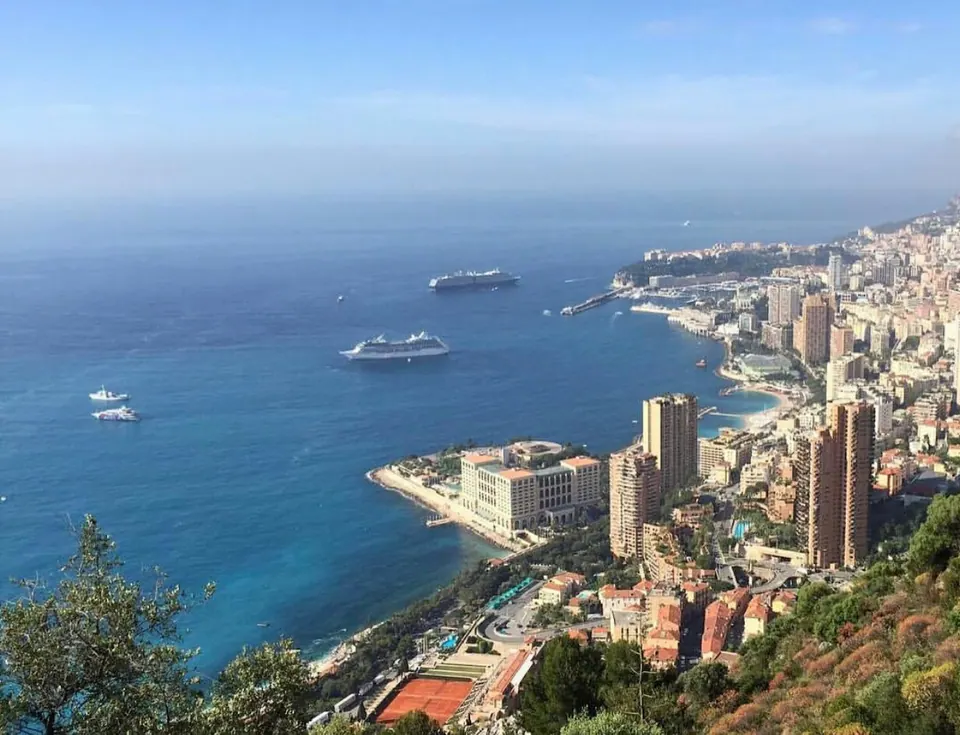
There is a particular quality to the silence around Monaco’s property values: nobody is particularly surprised any more. The principality’s prime index has sat at the top of every global comparison for a decade, the gap between it and the next most expensive market widening with an unhurried inevitability. At €58,200 per square metre on the latest Monaco market read, the number requires no drama. It simply is what it is: the product of two square kilometres, a population that has decided to stay, and a queue of buyers that does not shorten.
A market defined by what it cannot become
The most important thing to understand about Monaco is that it is not growing. The land area is fixed. Reclamation projects — the Anse du Portier development being the most recent significant example — add a marginal increment, but the principality’s physical limits are not going to change in any meaningful way within a planning horizon most buyers would recognise. Supply is not a variable. It is a constant, and a declining one as each generation of owners holds longer.
This creates a market that operates by different mechanics from most prime cities. In London or Miami, a significant new tower can add hundreds of units to the prime supply at a given time, temporarily widening the pool of stock available. In Monaco, even a project of modest scale represents a meaningful percentage of total annual transactions. The result is that price discovery happens through extreme competition for whatever happens to come available, and the signal it sends — consistently upward — tells you something about the depth of unrealised demand rather than about any particular macro condition.
The buyer profile reflects this. Monaco super-prime transactions are predominantly conducted by established owners trading within the principality, or by a very specific category of first-time buyer: someone who has decided that Monaco residency is a structural decision, not an opportunistic one. They are not testing the market. They are resolving a question about where they intend to be, and they are paying the price that question demands.
What you are actually buying
The pitch for Monaco has never been purely fiscal, though the tax environment remains part of the conversation for many buyers. What the principality delivers, at a density that should by rights make it disagreeable, is an unusual quality of security, service, and social concentration. Within a short walk of any address, you have access to a range of amenity — restaurants, healthcare, retail, marina, cultural calendar — that would occupy significantly more territory anywhere else. The efficiency is a design feature, not an accident.
For buyers prepared to engage with the process — which involves its own particular etiquette and, often, an existing relationship within the community — the full picture is laid out in our guide to how to buy in Monaco. What the guide cannot fully convey is the feeling of the transaction itself, which proceeds at the pace of a market that has no interest in hurrying and no need to discount.